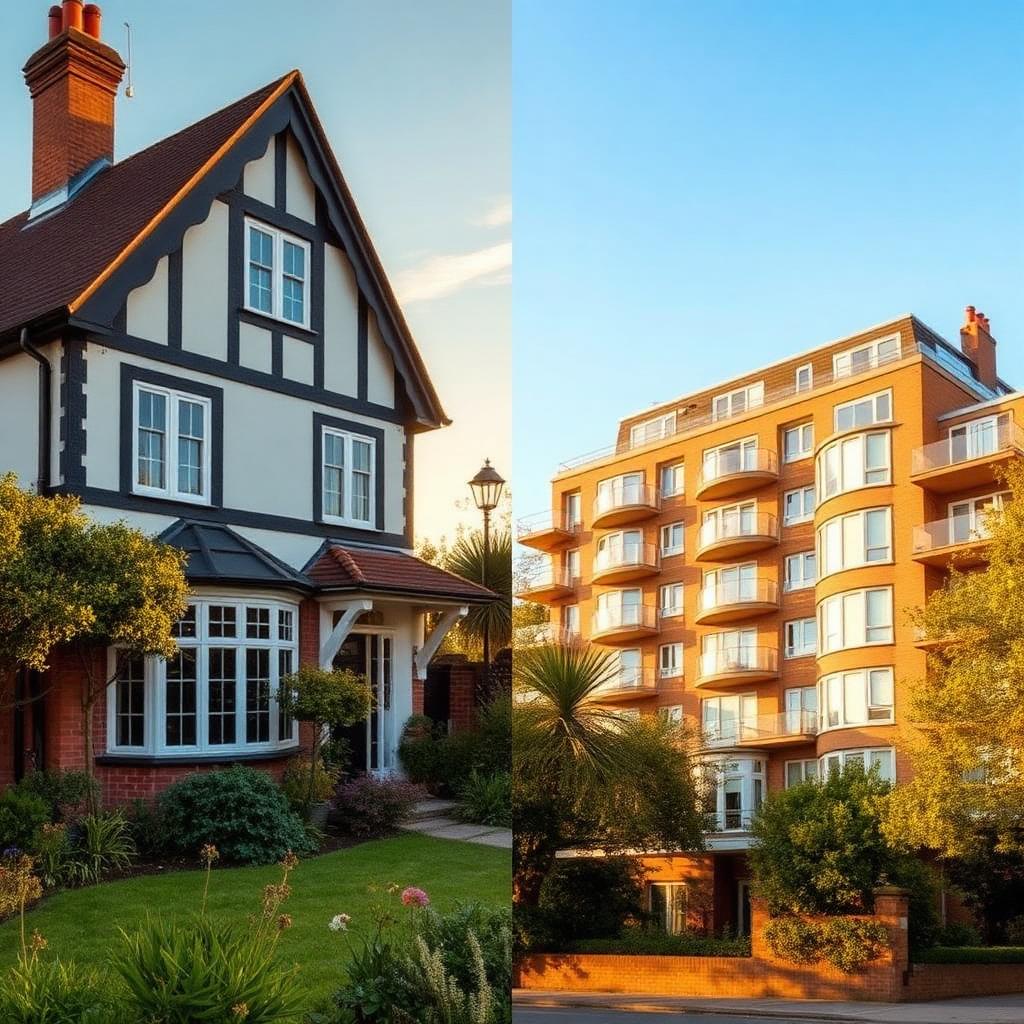
Know what you're buying
Many buyers focus on the house itself, but understanding what you're actually buying is just as important. Whether a property is Freehold, Leasehold or Commonhold can affect your rights, responsibilities and future costs.
This guide is educational and does not constitute legal advice. Always seek advice from a qualified solicitor or conveyancer before purchasing a property.
Interactive Comparison
Three ways to own a home
Select each card to explore what it means, who owns the land, typical property types and what to expect.
Freehold
What it is
You own the building and the land it sits on, outright and forever.
Who owns the land
You own the land under and around the property.
Typical property types
Most houses in England and Wales — detached, semi-detached and terraced.
Ongoing responsibilities
You are responsible for maintaining the building, garden and boundaries.
Common costs
No ground rent or service charges. You pay for your own repairs, insurance and upkeep.
Advantages
- Full control over your property
- No lease to run down over time
- Typically simpler to sell
- No ground rent or service charges
Things to consider
- All maintenance is your responsibility
- You cover buildings insurance yourself
- Some estates have shared-area charges via estate rentcharges
Side-by-Side Comparison
A quick visual reference — how the three ownership types compare on the things that matter most.
| Feature | Freehold | Leasehold | Commonhold |
|---|---|---|---|
| Own the property | You own it | For the lease term | You own your unit |
| Own the land | Land is yours | Freeholder owns it | Shared via association |
| Ground Rent | None | May apply on older leases | None |
| Service Charges | Usually none | Paid to freeholder or agent | Commonhold assessment |
| Lease Length | No lease | Fixed term, counts down | No lease |
| Maintenance Responsibilities | You handle everything | Freeholder handles building | Shared by owners |
| Managing Agent | Not typically | Often appointed | May be appointed |
| Ease of Selling | Usually straightforward | Depends on lease length | Lenders less familiar |
| Typical Property Types | Most houses | Most flats | Some blocks (rare) |
Deep Dive
Understanding Leasehold
Leasehold is the most common form of flat ownership in England and Wales. Because every lease is different, it's important to understand the moving parts.
What a lease is
A legal contract granting you the right to occupy a property for a set number of years, under agreed terms.
Why lease length matters
Leases run down over time. Lenders and buyers pay attention as the remaining years reduce.
Ground Rent
A payment to the freeholder for use of the land. On many newer leases this is now peppercorn (nominal).
Service Charges
Regular payments covering maintenance, cleaning, insurance and management of the building and communal areas.
Reserve Funds
A pot of money built up to cover future major works such as roof repairs or lift replacements.
Permission fees
Fees the freeholder may charge for consent to alterations, subletting or keeping a pet.
Managing Agents
Companies appointed to run the building day-to-day on behalf of the freeholder or residents.
Every lease is different
Terms, charges and rights vary from building to building. Your solicitor will review the specific lease before purchase.
Interactive Slider
Why Lease Length Matters
Use the slider to see how a leasehold property is generally perceived as its remaining years reduce. This is educational only — every lease and every lender is different.
Healthy
A lease around 99 years is often still considered healthy. Many buyers and lenders are comfortable at this length.
Government Reforms
Leasehold is changing
The Government has announced a series of reforms designed to improve the leasehold system in England and Wales.
Changes aim to strengthen consumer rights, simplify lease extensions and make home ownership fairer for leaseholders. The law continues to evolve, and some measures are being introduced in stages.
For the latest position, visit the official Government information for homeowners and leaseholders.
Interactive Checklist
Questions to Ask Before Buying
Tick off each question as you get answers. You can download this checklist to bring along to viewings and meetings.
Common Myths
A few widely-held ideas about property ownership that aren't quite right.
Leasehold means you don't own your home.
Truth: You do own your home — you own the right to occupy it under the terms of the lease for its remaining years. What you don't own outright is the land or, usually, the building structure.
Freehold properties have no ongoing costs.
Truth: Freehold removes ground rent and service charges, but you still pay for maintenance, buildings insurance and repairs. Some estates also have shared-area charges.
Every apartment is leasehold forever.
Truth: Most flats in England and Wales are leasehold today, but Commonhold exists as an alternative — and Government reforms may make other options more common in future.
Ground Rent and Service Charges are the same thing.
Truth: They're separate. Ground rent is a payment to the freeholder for use of the land. Service charges cover the cost of maintaining and running the building.

GYM Coach
Understanding the ownership structure of a property is just as important as understanding the mortgage. The more informed we are before making an offer, the fewer surprises there are later.
Premium Coaching
My Property Ownership Review
Every property is different. Once Coaching is unlocked, GYM helps you understand the ownership structure of the property you're considering and highlights key questions to discuss with your solicitor or mortgage adviser. This is educational — GYM does not provide legal advice or interpret legal documents.
Ownership Summary
- • Tenure type at a glance
- • Lease length snapshot
- • Key facts to verify
Questions to Ask
- • For your solicitor
- • For the seller / agent
- • For your mortgage adviser
Potential Costs Checklist
- • Ground rent expectations
- • Service charge estimates
- • Reserve fund considerations
Property Considerations
- • Managing agent overview
- • Major works flags
- • Permission requirements
Coach Notes
- • Personalised prompts
- • Suggested next steps
- • Adviser handover summary
Frequently Asked Questions
Keep this guide handy
Save it to your plan — with the ownership comparison table, leasehold checklist and questions to ask before buying.
Ready to explore your mortgage options? Back to My Plan.